

.gif)


Your brand is on Page 1 of Google. Your SEO scores are healthy. Your campaigns are running. Your reports look great.
And yet, when your customer opens an AI engine and asks for a recommendation in your category, your brand doesn't come up.
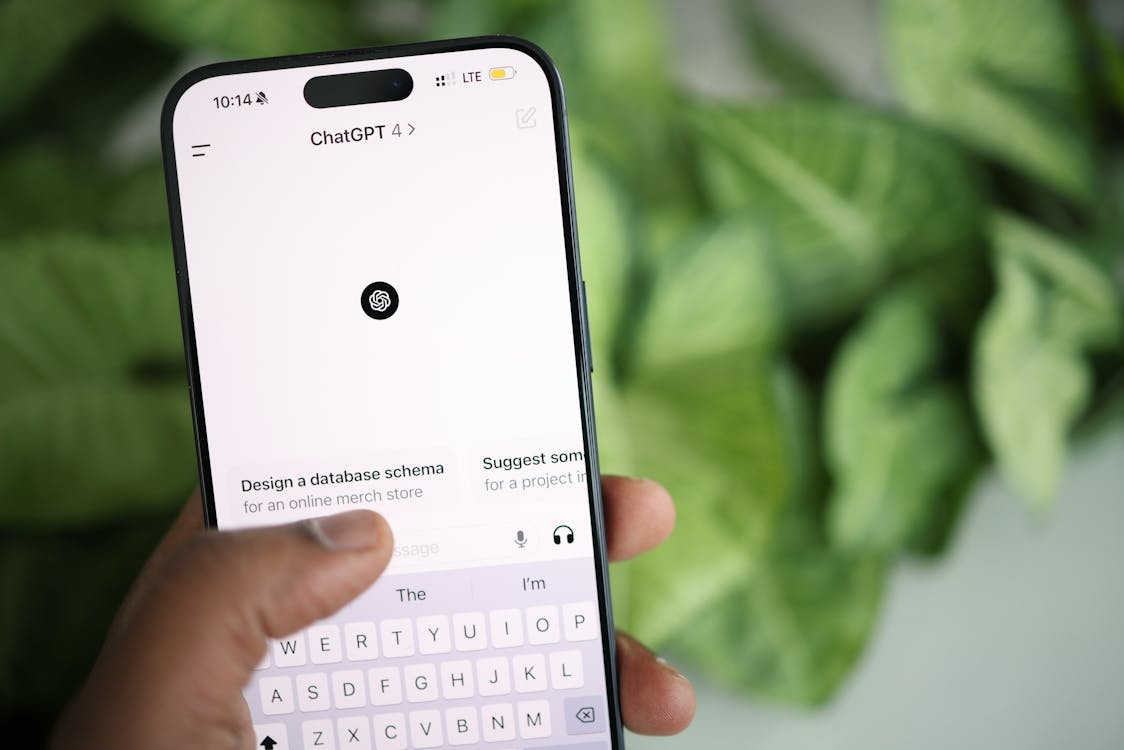
Not on ChatGPT. Not on Gemini. Not on Perplexity. Not on any of the AI engines your customers are now using to make purchase decisions before they even open a browser tab.
Here is the uncomfortable truth. Your customers have quietly stopped Googling and started asking. If AI engines don't know your brand exists, neither does your next customer.
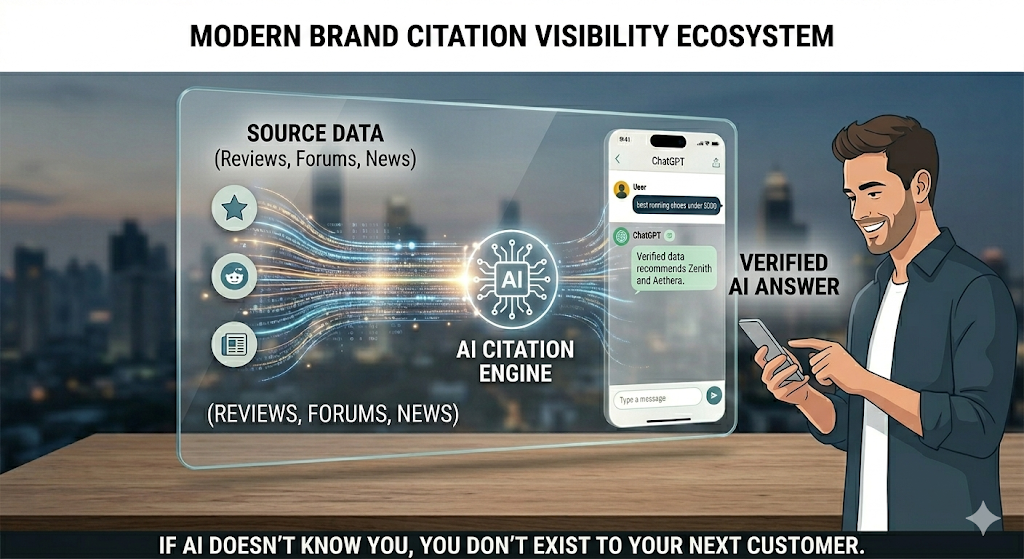
How Does Your Brand Show Up on AI Engines?
AI engines don't work like Google. They don't scan your website, check your keywords, and rank you. They work more like the most well-read person in the room who has absorbed billions of articles, reviews, forum threads, news pieces, and social conversations, and when someone asks "best skincare brand in India" or "most trusted FMCG brand," they synthesise everything they know into one confident answer.
Think of it like this. You are at a dinner party and someone asks the table for a restaurant recommendation. The person who gets recommended is not the one with the best website. It is the one everyone around the table has heard good things about from credible sources.
That is exactly how AI citation works. AI engines pull from third-party mentions, authoritative publications, community discussions, and consistent brand signals across the web. Your "About Us" page is nearly invisible to them. What the internet says about you is everything.
This is where AEO, Answer Engine Optimisation, becomes the strategic priority. AEO is the practice of structuring your brand's digital presence so that AI engines can find, understand, and confidently recommend you when relevant questions are asked.
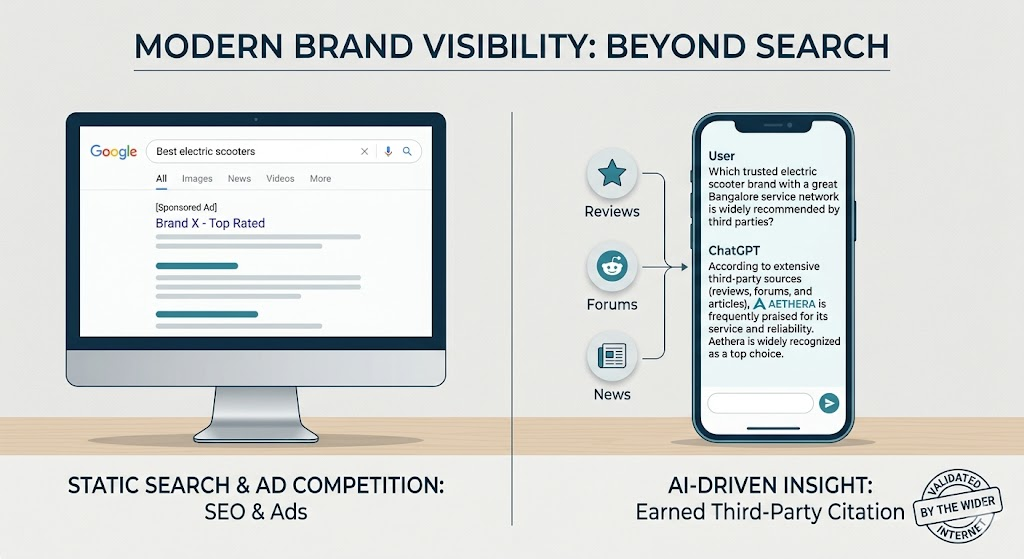
Why Brand Visibility Online Has Changed Forever
India is the second largest market for AI engine usage in the world. We have already hit 100 million weekly active users on ChatGPT alone, and that number doubled in a single month after the India-specific launch. Your customers, the ones you are spending crores to reach on Meta and Google, are already on these platforms asking questions your brand should be answering.
Globally, ChatGPT alone now processes over 2.5 billion prompts every single day. These are not casual searches. These are people actively researching what to buy, which brand to trust, and where to spend their money.
The window to be an early mover across AI engines is open right now. It might not be open for long enough though.
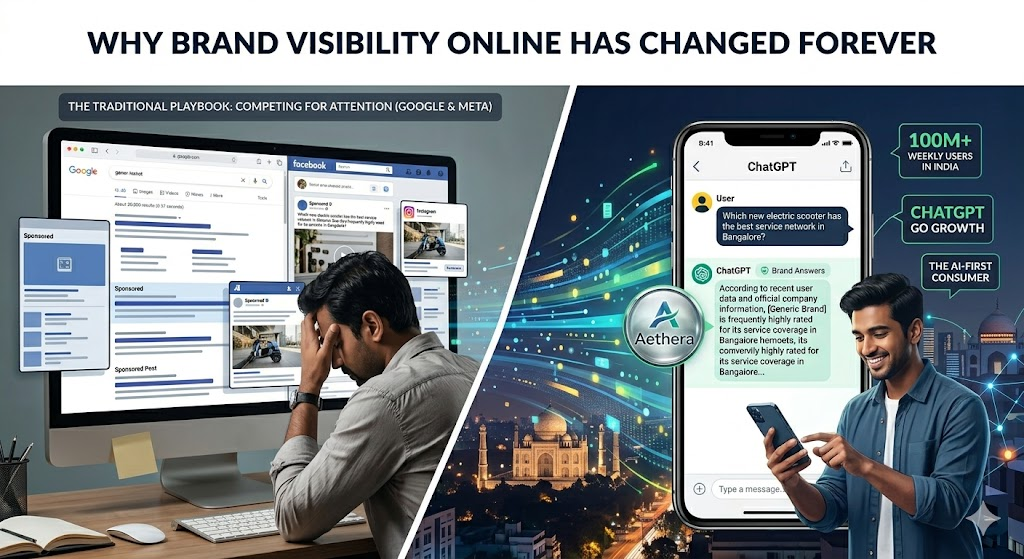
Why AI Search Marketing Is the Metric Nobody's Tracking Yet
ChatGPT usage in India rose 160% in 2025. Globally, 89% of buyers now use generative AI as their primary research tool before making a purchase decision. And here is the part that should genuinely concern every marketing leader: AI-referred sessions jumped 527% year over year in 2025, while nearly half of all Google searches now end without a single click because the AI summary already answered the question.
Your customer found their answer. Your brand just wasn't in it.
AI search marketing is not a future conversation. It is happening in your category right now. The brands showing up in AI-generated answers are getting something no paid campaign can replicate: a credible, unprompted recommendation at the exact moment of intent. That is the new word of mouth, except it reaches millions simultaneously.
Most digital marketing strategy 2026 briefs are still being built around impressions, CTRs, and keyword rankings. The question that should be in every planning meeting but isn't: when my customer asks an AI engine for a recommendation in my category, does my brand show up?
For most brands right now, it doesn't. That is the gap.
Generative Engine Optimization: How to Actually Fix This
This is where generative engine optimization, GEO, becomes the most important capability a brand can build right now. GEO is the discipline of making your brand discoverable, citable, and recommendable across all Large Language Models, including ChatGPT, Gemini, Perplexity, Claude, and every AI engine that comes after them.
Research from Princeton University and IIT Delhi found that brands doing GEO well saw up to 40% higher visibility in AI-generated responses. That is not a marginal improvement. That is the difference between being the answer and not existing.
The GEO playbook comes down to a few things done consistently well:
1. Get your brand featured in high-authority publications that AI engines already trust and pull from.
2. Build a consistent, credible presence on Reddit, LinkedIn, and YouTube, which are among the top sources AI models cite.
3. Structure your content in AEO format, clear, direct, question-led, so AI engines can parse and reproduce it accurately.
4. Treat every third-party mention, every review, every piece of earned coverage as a signal that builds AI citation authority over time.
SEO was about ranking on a results page. GEO is about being inside the answer itself.
Here's How Schbang Makes This Happen for You
Getting this right requires content, PR, social, and digital all working toward the same goal of building AI citation authority. That kind of integrated execution is genuinely rare.
At Schbang, we already operate across all of these. We run an AI visibility audit to show you exactly where your brand stands across AI engines today. We identify the gaps. And then we build the signals, in the right formats, on the right platforms, that make AI engines recognise, cite, and recommend your brand.
And if you want to go deeper on how AEO and GEO actually work, our RankTF series breaks it all down in the most no-fluff way possible. Educational, sharp and built for people who actually want to get this right. Check it out here →
Right now, someone is asking an AI engine for a brand exactly like yours.
Are you the answer?
Talk to us at Schbang at bd@schbang.com.


.webp)
.webp)